


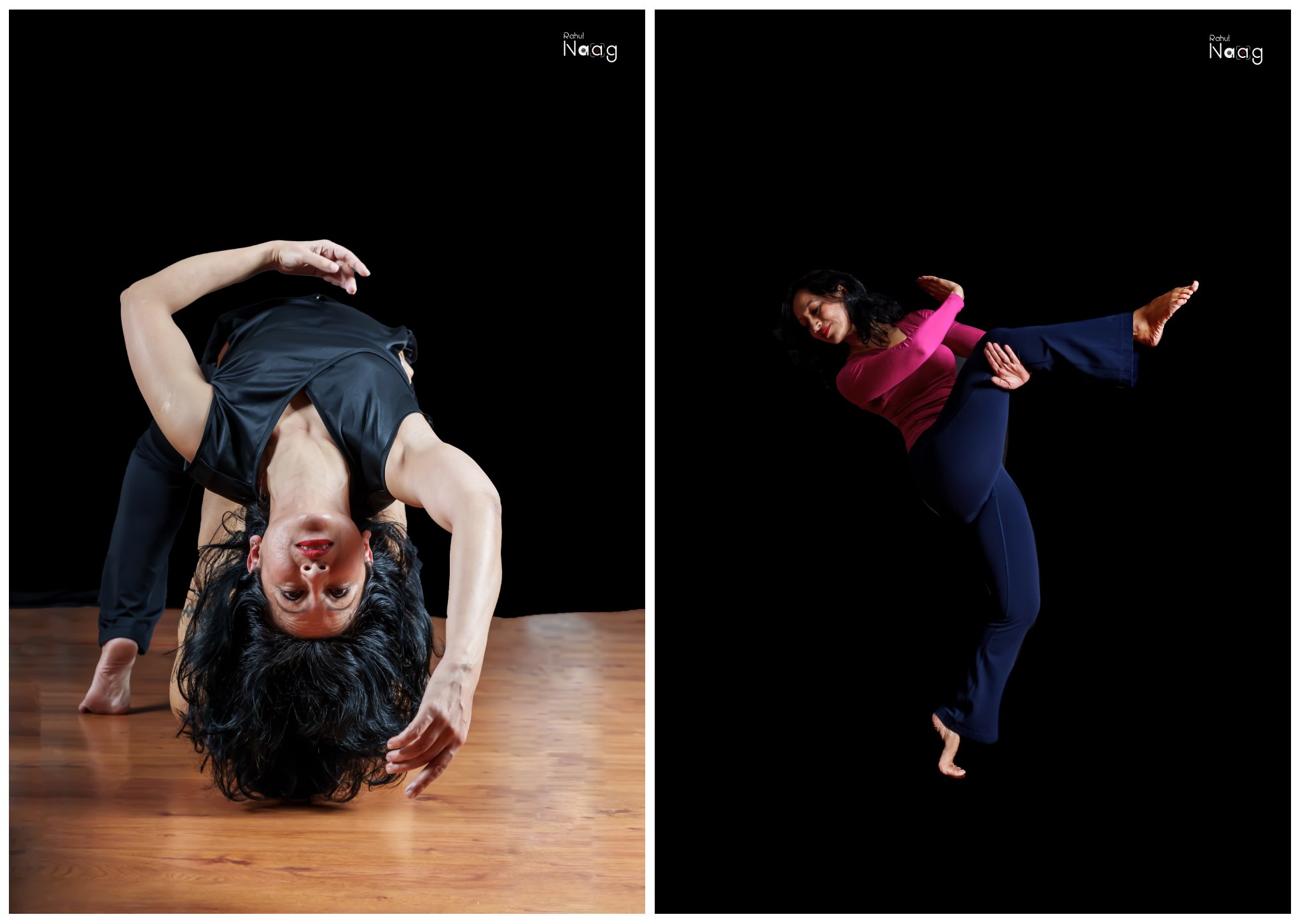
There are loves that define a life. Loves that arrive before language does, before reason can make sense of them. For a dancer, this love has a name, and it is not the name of any person. It is not found in the warmth of a gaze across a room, nor in the soft-spoken promises made in quiet moments. It is found the moment she steps out from the wings, feels the cool firmness beneath her bare feet, and the light falls on her face like a hand she has always known.
Her love is the stage.
Some loves are chosen. This one is recognised. The first time a dancer steps onto a real stage – not the studio floor with its worn markings and mirrored walls, not the parking lot her school hired for a recital – but a true stage, with its particular smell of rosin and dust and something ancient, she does not merely perform. She arrives. As though everything before this moment was only rehearsal for this recognition: here is where I exist. Here is where I am possible.
This is the truest meaning of love. Not possession. Not dependence. But the certainty that without this particular presence, some essential part of you cannot live.
The stage gives nothing overtly. It does not move. It does not speak. It does not reach toward the dancer or adjust itself for her comfort. It waits, as the best loves always wait – with absolute constancy, with an openness that asks only that you come.
And so, she comes.
She comes with joy spilling from her arms, the kind of joy that has no name in ordinary language but must be made visible through the body. She comes with grief so heavy she could not have carried it another step. She comes with the white heat of anger, with the trembling of sorrow, with the rare, ecstatic fullness of a life suddenly, briefly, understood. And the stage receives it all. Absorbs it. Holds it in the grain of its wood, in the spring of its floor, without judgment, without reservation.
This is the quality that only the most enduring loves possess: the capacity to hold everything you bring, without breaking, and without requiring you to bring less.
For a contemporary dancer, this love is not metaphorical. It is physical.
Where classical forms reach upward – toward elevation, toward transcendence, toward the sky – contemporary dance also remembers the earth. It remembers the body’s true relationship with gravity: not as an enemy to be defeated but as a conversation partner, a collaborator, a force that makes certain kinds of beauty possible only because it first makes things difficult.
The contemporary dancer knows her stage the way one knows a body. She knows which edge gives slightly under a jump, where the floor is colder, where the light from the fourth wing falls at a particular afternoon angle. She has spent hours with her cheek pressed to it, her hands splayed across it, her spine curved against it. She has rolled across it and pushed off it and let it catch her weight in falls that looked reckless but were, in fact, a precise negotiation of trust.
This is floor work. And it is, in its way, the most intimate thing a dancer ever does on stage.
She doesn’t perform on the stage. She performs with it.
There is a moment in floor work where the boundary between body and surface becomes genuinely ambiguous. The dancer’s hand does not just rest on the stage; the stage becomes the extension of her arm, the beginning of her gesture. The pressure in her hip is not just her weight pressing down; it is a conversation, force meeting force, and the movement that emerges belongs to both of them. The stage is no longer the ground beneath her. It becomes a medium of her expression – as much a part of the performance as her breath, her arms, her eyes.
Think of what a stage endures. Every performance brings a different dancer, a different story, a different body’s particular way of existing in the world. It has held joy and mourning, triumph and catastrophic failure – the performance that ended in silence, the artist who forgot everything in the third minute and stood there, exposed and terrified, and the stage held her then too, steady and certain beneath her feet, reminding her: you are still here. We are still here, together.
A stage absorbs failure like no human audience can. The audience sees the stumble, the missed cue, the unplanned wobble. The stage simply receives the weight of it, neither accusing nor consoling. It is not indifferent – indifference is a kind of absence. The stage is entirely present, which is different. To be entirely present is to witness without agenda, to absorb what is real without insisting it be something else.
This is what the dancer returns to. Not the applause – applause is generous but passing. Not the reviews – those belong to a world outside the wings. She returns to the stage because it is the only place where she is both completely seen and completely free. The only place that holds her accountable to nothing but the truth of her own movement.
There is an old theatrical idea: the stage has memory. Performers speak of it without quite being able to explain it. A stage where great performances have happened feels different from an empty rehearsal space, even if they are the same dimensions, the same wood, the same distance from fly to floor. Something accumulates. Some residues of presence, of intention, of the thousands of bodies that have stood exactly here and meant something by standing.
The dancer inherits all of this. She steps into a lineage of other loves, other bodies, other performances the building has held and kept. And she adds her own. Every rehearsal, every performance, every moment she has stood in the wings and felt her heart beating loud enough to hear – all of it leaves something behind.
And the stage holds it.
People will sometimes ask a dancer about the loves of her life, and she will speak of people: teachers who changed how she thought about a body in space, collaborators who became something like family, audiences who changed the room’s temperature with the quality of their attention. These things matter. They are real.
But if you ask her privately – in the particular honesty that comes only late at night after a performance, when the adrenaline has receded and the stage has gone dark and she is standing in the wings still, not quite ready to leave ….
…. She will tell you the truth.
She has never not been in love with it. She has fallen out with it, raged at it, left it for months and returned humbled and a little different, knowing more than she did before. She has had bad nights on it, unravelling nights, nights when nothing worked and the music felt wrong and her body refused to do what she asked of it. She has had nights so beautiful she could not speak afterward.
Through all of it, the stage has been constant. Fixed. There.
And perhaps this is what makes it her true love – the rarest kind. There is no weight of expectation between them. The stage does not ask her to be brilliant every night, does not keep a tally of great performances against ordinary ones. She does not resent the stage for its silence, for its inability to comfort her on the bad nights. There is no frustration that curdles into distance, no disappointment that accumulates over years until the love is more memory than feeling. There is only what there has always been: her showing up, and the stage receiving her – completely, without condition, without score. This is what total acceptance looks like. Not earned through consistency, not contingent on whether she arrives at her best or her most broken. She is simply, always, welcome.
This is not the love of fairy tales. It demands no tenderness in return. It will not tell her she is beautiful when she is not yet good enough, will not soften the truth of what her body cannot yet do. It is more like the love between a person and the practice that defines them: unromantic in the day-to-day, essential in the way that only something necessary can be.
Without it, she can exist. She simply cannot be herself.
And so, she returns. She will always return.
When she steps out of the wings, her feet find the floor with the certainty of recognition. Not arrival – she was never really gone. The stage was simply waiting, as it always waits, constant and patient and entirely hers.
She takes a breath. The light comes up.
The romance between them begins.
This is for every dancer who has ever stood in the wings and felt, with absolute certainty, that she was about to come home……